At first glance, a claw machine may seem like a simple arcade game—drop a coin, move the joystick, press a button, and hope for a win. Yet behind this seemingly straightforward experience lies a carefully engineered structure that determines how stable the machine runs, how consistent the grabbing feels, and whether it can operate profitably over the long term.
From the cabinet and display design to the claw mechanism, rail system, control board, and prize outlet, every structural component plays a role in gameplay performance and commercial reliability.
This article takes you inside the basic structure of a commercial claw machine, explaining how each core part works together and why understanding these structural details is essential for anyone involved in purchasing, operating, or investing in claw machines.
What Is a Claw Machine? (From a Structural Perspective)

Basic Working Principle of a Claw Machine
A claw machine operates through a coordinated mechanical and electronic system designed to control movement, gripping force, and prize release. After payment is made, the player uses a joystick to position the claw along horizontal rails, then activates a drop command that sends the claw downward along a vertical axis. The machine’s internal control board manages timing, claw strength, and movement precision, ensuring each play follows a predefined logic rather than random behavior.
Structural Differences Between Commercial and Home Claw Machines
Although commercial and home claw machines may appear similar in shape, their internal structures are designed for very different purposes. The key differences lie in durability, control systems, and long-term operational stability.
Commercial Claw Machines
Commercial claw machines are built for continuous use in arcades, shopping malls, and entertainment venues. They feature reinforced metal cabinets, industrial-grade motors, adjustable claw strength systems, and programmable control boards that allow operators to manage win rates and gameplay difficulty. These machines are designed to operate for long hours with minimal downtime and predictable maintenance cycles.
Home Claw Machines
Home claw machines are designed mainly for entertainment rather than revenue generation. Their structures are lighter, often using plastic components, simplified rail systems, and fixed claw strength settings. While suitable for casual use, they lack the structural durability, precision, and configurability required for commercial operation.
Why Structure Determines a Machine’s Value
The true value of a claw machine is not defined by its appearance, but by the quality and design of its internal structure. A well-engineered structure ensures stable gameplay, consistent grabbing performance, lower failure rates, and controlled profitability over time. For operators and buyers, understanding structural design is essential for evaluating long-term return on investment rather than short-term visual appeal.
Overall Structure of a Claw Machine

External Structure vs Internal Structure: How the System Is Divided
From a structural standpoint, a claw machine can be clearly divided into two main parts: the external structure and the internal structure. The external structure focuses on what players see and interact with, such as the cabinet, glass panels, control interface, and lighting system, all of which influence visual appeal and user experience. The internal structure, on the other hand, is responsible for how the machine actually operates, including movement accuracy, claw performance, payment logic, and prize delivery. This division helps manufacturers and operators evaluate a machine not only by appearance, but by functional reliability and long-term performance.
Core Systems Inside a Complete Claw Machine
A fully functional commercial claw machine is made up of several core systems working together as a single unit. These typically include the cabinet and frame system for structural support, the display and lighting system for visibility, the control and input system for player operation, the claw and rail system for movement and grabbing, the main control board for logic and settings, the payment system for monetization, and the prize chute system for secure prize release. Each system has a distinct role, but any weakness in one can affect the overall gameplay and operational stability.
Structural Overview Diagram Explanation
A structural overview diagram provides a clear visual reference for how all major components are positioned and connected inside the machine. It helps viewers quickly understand the relationship between the claw mechanism, rail system, control board, payment modules, and prize outlet, making it easier to grasp how player actions translate into mechanical movement and prize outcomes. For buyers and operators, this type of diagram is especially useful for understanding maintenance access points, upgrade possibilities, and overall machine layout at a glance.
External Structure Breakdown
Cabinet System

Metal Cabinet vs Plastic Housing
Claw machine cabinets are mainly made from either metal sheet construction or plastic housing. Metal cabinets are the standard choice for commercial environments due to their strength, weight, and resistance to long-term vibration and impact. Plastic housings are lighter and more affordable, but are typically used only for home or short-term entertainment scenarios where durability is not a primary concern.
Thickness, Welding, and Structural Stability
Beyond material choice, cabinet thickness and welding quality play a major role in overall machine stability. Thicker metal panels reduce cabinet deformation, while proper internal welding ensures the machine remains level during operation. A stable cabinet prevents shaking during claw movement, which directly affects gameplay accuracy and the player’s perception of quality.
Why Cabinet Structure Matters in Commercial Settings
In commercial locations such as arcades and malls, claw machines operate continuously and are frequently moved or rearranged. A solid cabinet structure protects internal components, reduces maintenance frequency, and maintains a premium appearance over time—factors that directly influence buyer confidence and purchasing decisions.
Glass & Display Structure

Tempered Glass vs Acrylic Panels
Tempered glass is widely used in commercial claw machines due to its scratch resistance, clarity, and safety performance. Acrylic panels are lighter and easier to shape, making them suitable for creative designs, but they are more prone to surface wear. The choice depends on whether durability or design flexibility is prioritized.
Full-Transparent vs Semi-Transparent Design
Display design plays a crucial role in first impressions. Semi-transparent machines focus attention on the prize area, while full-transparent designs create strong visual impact from every angle. To enhance visual attraction and encourage photo sharing, fully transparent claw machines—such as fourth-generation full-clear designs—are increasingly used to draw attention, generate social exposure, and bring in new foot traffic organically.
How Display Structure Influences Walk-In Rate
A clear and open display increases visibility of prizes and gameplay, lowering the psychological barrier for first-time players. Machines that visually stand out are more likely to stop passersby, turning casual viewers into active players.
Player Control Panel System

Joystick Structure
The joystick controls horizontal claw movement and must provide consistent resistance and smooth response. A well-built joystick allows precise positioning, while poor-quality components can feel loose or delayed, reducing player confidence.
Button Structure
The drop button activates the claw sequence and should deliver a clear tactile response. Reliable internal switches ensure consistent triggering, preventing missed inputs that frustrate players during critical moments.
How Control Feel Affects Repeat Play
Players may not understand machine structure, but they immediately feel it. Smooth joystick movement and responsive buttons create a sense of control, increasing satisfaction and encouraging repeat play, which is essential for long-term machine performance.
Lighting & Visual System
LED Strip Structure
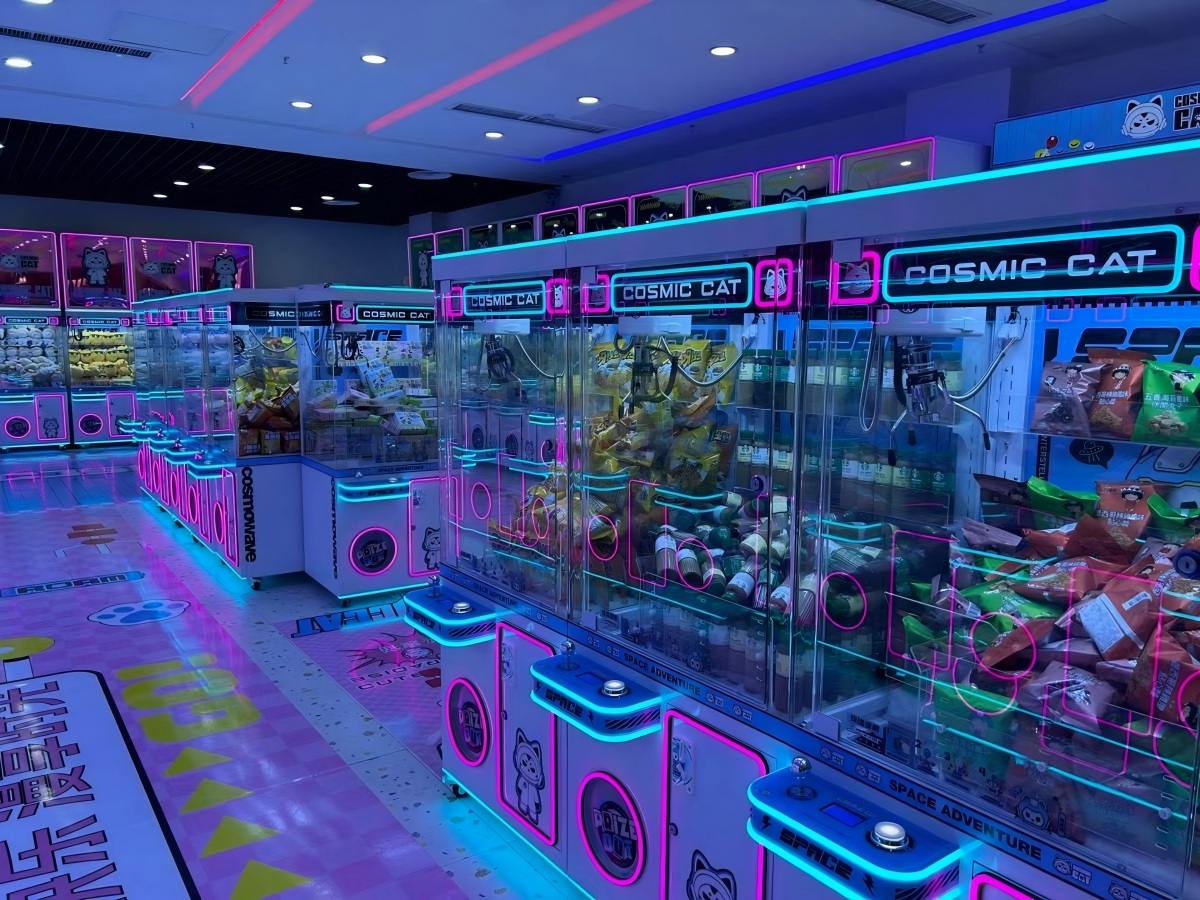
LED strips are commonly integrated along cabinet edges and frames to outline the machine and enhance visibility. Properly installed lighting systems are designed for long operating hours with stable brightness and minimal heat generation.
Internal Illumination Design
Internal lighting ensures prizes are clearly visible regardless of ambient conditions. Balanced illumination prevents shadows inside the prize area and highlights textures and colors, making rewards appear more appealing.
Why Arcades Must Be “Bright”
In competitive arcade environments, brightness equals attention. Well-lit claw machines stand out from a distance, attract players instinctively, and extend play time. Lighting is not just decoration—it is a functional part of customer acquisition and engagement.
Internal Core Systems
Claw Mechanism

Two-Claw vs Three-Claw Structures
Two-claw and three-claw designs differ not only in appearance, but in gameplay logic. Three-claw structures are commonly used for lifting and grabbing prizes directly, offering a more intuitive experience. Two-claw structures, often seen in Japanese-style machines, are designed for pushing, pulling, or hooking prizes rather than lifting them outright, creating a more skill-based challenge.
How Claw Strength Is Controlled
Claw strength is not fixed; it is regulated by the control system through voltage, timing, and gripping duration. Manufacturers can adjust how tightly the claw closes, how long it maintains grip, and when it releases. This allows operators to fine-tune difficulty without changing hardware, ensuring consistent performance across different prize types and business models.
Relationship Between Claw Structure and Win Rate
The claw mechanism directly defines how prizes are won. A lifting-focused claw emphasizes strength control, while a pushing-based structure relies on physics and positioning. When players recognize that a prize can be moved closer to the drop zone through repeated attempts, their sense of challenge increases significantly—encouraging continued play rather than discouragement.
X / Y / Z Rail System
Three-Axis Movement Explained
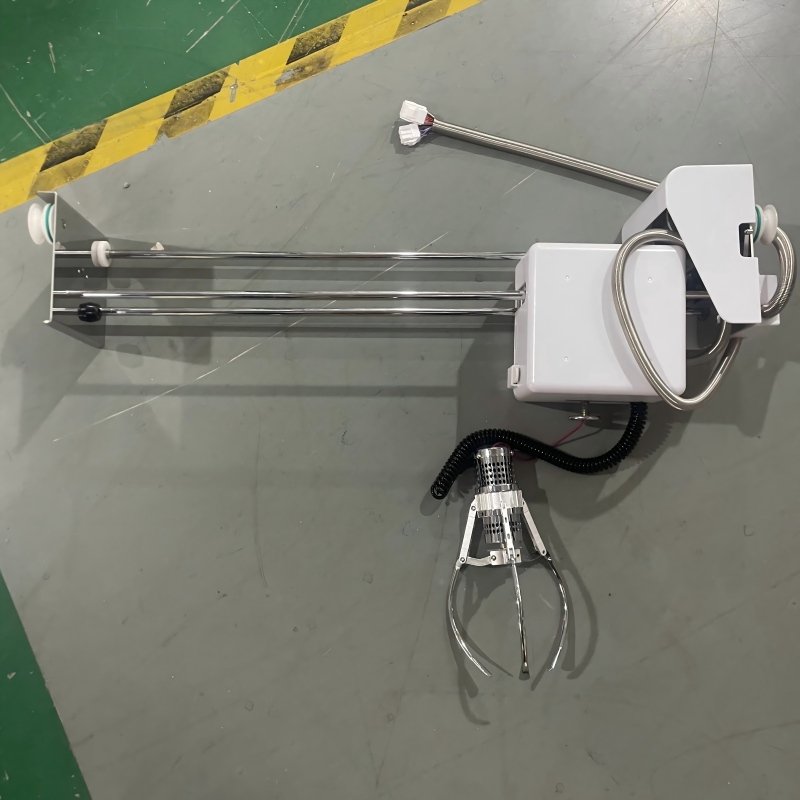
The rail system allows the claw to move along three axes: left-right (X), forward-backward (Y), and up-down (Z). These movements must be synchronized smoothly to ensure accurate positioning and stable descent, forming the mechanical foundation of all claw gameplay.
Motor Type Differences
Different claw machines use different motor configurations, ranging from standard stepper motors to higher-precision motor systems. Higher-quality motors provide smoother movement, better stopping accuracy, and reduced vibration, all of which contribute to a more controlled and predictable grab.
How Rail Precision Affects Grab Success
Rail precision directly impacts whether a player feels the game is fair. In markets like Japan, two-claw machines no longer rely on simply lifting prizes. Instead, gameplay is based on pushing, pulling, and leveraging gravity and friction to move prizes step by step. When players realize that progress is physically measurable, the challenge becomes more engaging, dramatically increasing repeat attempts.
Main Control Board & Program Logic

Role of the Main Control Board
The main control board acts as the brain of the claw machine. It processes player inputs, manages motor movement, controls claw strength, and coordinates lighting and sound effects, ensuring all systems operate in a synchronized and repeatable manner.
Win Rate and Difficulty Logic
Win rate is controlled through software logic rather than chance. The system can define difficulty levels, claw behavior patterns, and guaranteed-win mechanisms depending on the desired operating strategy. This flexibility allows machines to remain challenging while still providing achievable rewards.
Program Requirements Across Different Markets
Different markets demand different gameplay logic. Advanced control boards—such as those developed and released by Chengjietian—are designed to support a wide range of claw machine play styles, making them adaptable to diverse regional preferences and commercial environments.
Payment System Structure

Coin Acceptor Mechanism
Coin acceptors verify coin size, weight, and material before granting play credits. Reliable coin systems reduce jams and misreads, ensuring smooth operation in high-traffic environments.
Bill Acceptor Structure
Bill acceptors recognize and validate paper currency before converting it into game credits. They are commonly used in international markets where cash usage remains high.
Integration of Cashless and App-Based Payments
As technology advances, some chain operators are shifting toward app-based payment systems. Players can register memberships, recharge balances, and use NFC or mobile payments directly from their phones. In more developed markets, this approach is gradually replacing traditional coin and bill systems, offering higher engagement through promotions, instant notifications, and improved customer retention.
Prize Chute & Anti-Theft Structure

Prize Chute Design
The prize chute guides rewards safely from the playfield to the player. Its shape and angle are designed to ensure smooth delivery while preventing prize blockage.
Anti-Retrieval Mechanisms
Anti-theft structures such as flaps, barriers, or one-way doors prevent players from reaching back into the prize area. These features protect both inventory and revenue without affecting normal gameplay.
Safety Design Differences by Region
Security and safety standards vary by country. Some markets require stricter anti-retrieval mechanisms and child-safety features, while others prioritize ease of access. Structural design must adapt accordingly to meet local regulations and operator expectations.
Structure × Business
Why Structure Determines the Payback Period
Failure Rate vs Structural Quality
In real-world operation, most downtime issues are structural rather than cosmetic. Weak cabinets, low-precision rails, unstable claw mechanisms, or poorly integrated electronics increase failure rates over time. Even small structural compromises can lead to frequent repairs, lost operating hours, and reduced revenue consistency.
Long-Term Impact of Structural Stability
A stable structure ensures predictable gameplay behavior day after day. When machines perform consistently, operators can fine-tune settings with confidence, reduce maintenance intervention, and keep player experience uniform across multiple locations. Over months and years, this stability directly shortens the payback period.
The Real Relationship Between Cost and Profit
Lower upfront cost does not always translate into higher profit. Machines with inferior internal structures may appear economical at purchase, but hidden costs—repairs, replacements, customer complaints, and reduced replay value—quickly erode margins. From a business perspective, structural reliability is a long-term profit multiplier rather than an expense.
Common Structural Misconceptions in Commercial Claw Machines
Is Stronger Claw Power Always Better?
Excessive claw strength may increase short-term wins, but it often reduces gameplay balance and long-term revenue. Sustainable claw machine operation relies on controlled difficulty, not brute force. Proper structure allows claw strength to be adjusted precisely without damaging components or gameplay logic.
Do More Lights Always Mean More Revenue?
Lighting attracts attention, but excessive or poorly designed lighting can distract players, increase power consumption, and complicate maintenance. Effective visual systems are integrated into the cabinet structure and gameplay flow rather than added as decoration alone.
Hidden Risks of Cutting Structural Corners
Structural shortcuts are rarely visible at first glance. Thinner metal, simplified rail assemblies, or downgraded internal parts may pass initial inspection but often fail under continuous use. These compromises increase long-term risk and undermine operational confidence.
Structural Selection Recommendations by Scenario

Shopping Malls
Machines placed in malls benefit from strong visual presence and quiet, stable operation. A solid cabinet, clear display structure, and smooth control response help attract casual shoppers and encourage impulse play without causing disruption.
Arcade Centers
High-traffic arcades demand robust internal structures capable of continuous operation. Reinforced cabinets, precise rail systems, and configurable control logic are essential to maintain uptime and consistent performance across large machine fleets.
Amusement Parks
In amusement parks, claw machines must withstand frequent use by a wide range of players, including children. Structural durability, enhanced safety features, and secure prize delivery systems are especially important in these environments.
Pop-Up Events and Short-Term Installations
For pop-up or event-based use, portability and quick setup become priorities. Lightweight but stable cabinet structures, simplified payment integration, and easy maintenance access allow operators to deploy machines efficiently without sacrificing basic reliability.
FAQ & Market-Specific Requirements
Questions We’re Asked Most, Across Different Markets
Why does the claw sometimes feel accurate, and sometimes not?
In most cases, this has more to do with structure than luck. Rail alignment, motor response, and cabinet stability all affect positioning accuracy. When these elements are consistent, the claw behaves predictably. When they aren’t, even a small deviation can change how the grab feels from one play to the next.
Why do claws feel strong at first, then weaker later?
Claw strength is controlled by program logic, not fixed hardware force. Many machines are designed to vary grip behavior to maintain gameplay balance. If the structure is stable, these adjustments feel natural. If the structure is unstable, the same logic can feel inconsistent or unfair.
Why do similar-looking machines perform so differently?
Appearance rarely reflects internal quality. Two machines may look identical but use different rail systems, motors, control boards, or cabinet structures. These hidden differences explain why one machine runs smoothly for years while another requires constant adjustment.
Can one machine structure fit all markets?
Not really. Different markets expect different gameplay behavior. Some prefer skill-based progression, others expect more direct wins. A flexible structure and adaptable control system are essential to meet these expectations without changing hardware repeatedly.
Structural Considerations by Market
Japan
Japanese-style claw machines often emphasize physics-based gameplay—pushing, pulling, and incremental movement rather than direct lifting. This requires highly precise rail systems and consistent claw positioning so players can clearly see progress and feel motivated to continue.
Southeast Asia
In many Southeast Asian markets, balance is key. Machines need to handle high traffic while offering approachable gameplay. Structural durability and stable claw response are prioritized to support long operating hours with minimal downtime.
Europe & North America
These markets often focus on safety, reliability, and long-term operation. Strong cabinets, secure prize chutes, and compliant payment systems are essential. Gameplay tends to favor clarity and fairness over extreme difficulty.
Middle East
Durability and visual presence are especially important. Machines are often placed in open, high-visibility environments, so cabinet strength, lighting integration, and heat tolerance play a larger role in structural design.
Final Thoughts
From the outside, a claw machine may look simple. But once you understand how structure affects gameplay, maintenance, and profitability, it becomes clear why internal design matters far more than surface appearance. The better the structure, the easier it is to operate, adjust, and scale a claw machine business over time.
Call to Action
If you’re planning to purchase claw machines, expand an arcade, or adapt your machines to a specific market, understanding structure is the first step. If you’d like to discuss which structural configuration fits your business model—or simply want a clearer look inside how commercial claw machines are built—we’re always open to sharing practical insights from the factory side. Feel free to reach out and start the conversation.